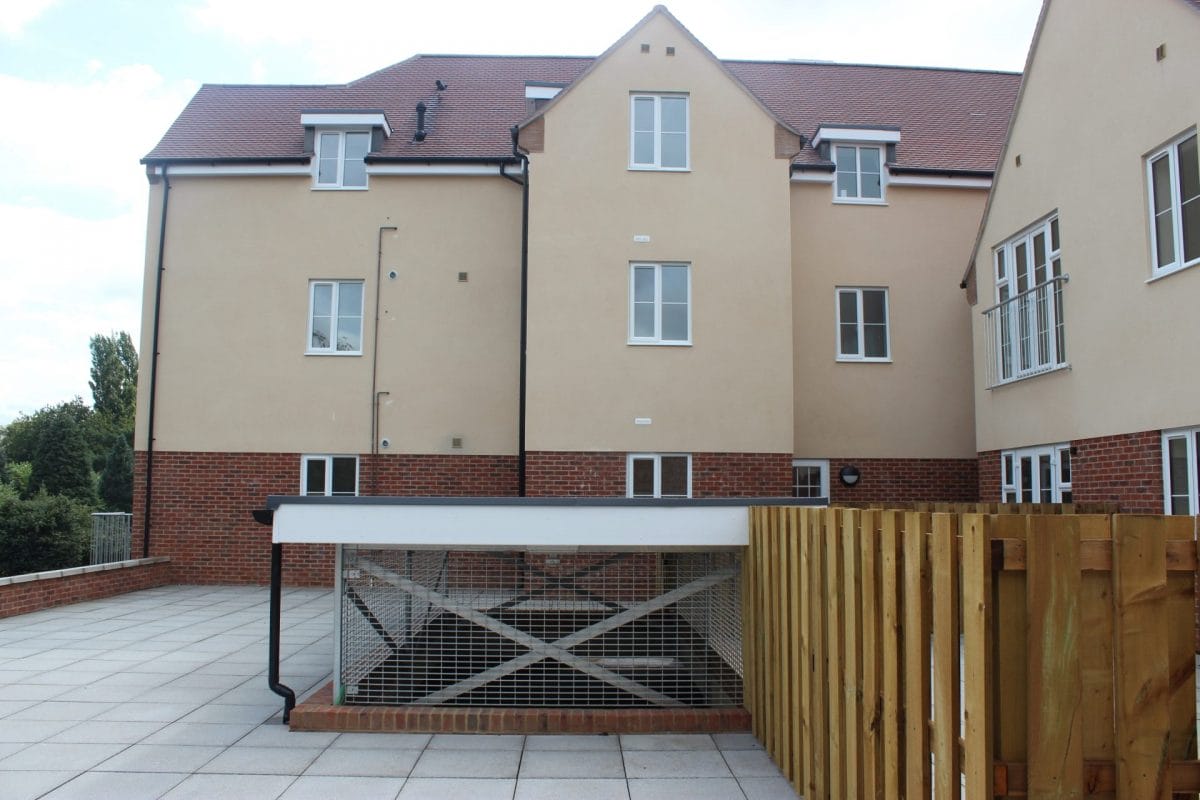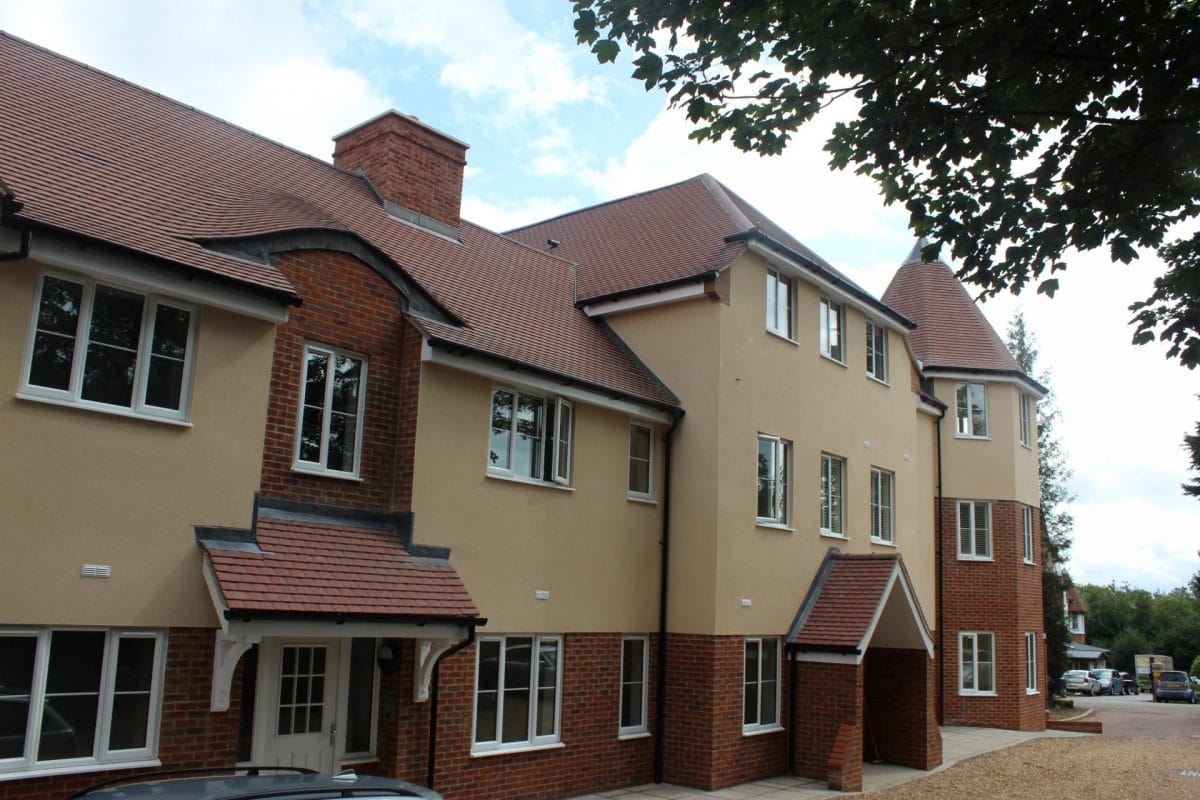
The Castle Gate scheme comprises a total of 16 1-, 2-, and 3-bedroom quality apartments within a 4-storey building, located just off Junction 18 of the M25, constructed on behalf of a private developer. The 180 acre Chorleywood Common and golf course is within walking distance of the residential development, with country walks along the nearby Chess Valley.
The spacious executive apartments are fully finished and fitted out with two tiled bathrooms, built in wardrobes, shuttered windows and open plan kitchen/lounge, fitted out to a high standard, all with a high EPC rating (B). Apartments to the rear of the building have Juliette balconies; there is secure allocated parking, lift access, communal gardens and a bike store.
The construction also included an underground reinforced in-situ concrete car park and ground floor with traditional masonry superstructure, precast flooring and a traditional timber roof that also included elements of supporting steel.
The basement car park and access ramp filled the majority of the site, with the building footprint positioned in an L-shape over two sides of the basement – with the remaining area to the rear being an external terrace for residents and landscaped private garden space. To the front of the property there is an access route to the basement ramp and additional visitors parking.
The envelope was a mixture of brickwork and rendered blockwork, with the superstructure constructed of precast concrete planks and masonry party walls, with studwork internal partitions to each apartment. There were a number of challenges on this project:
1 The building almost filled the footprint of the site; when the excavation was carried out (including working space) there was no access to the rear until the basement walls were cast and backfilled after curing.
2 The narrow shared entrance with an adjacent care home proved challenging – with cranes, concrete pumps and lorries of excavated material to be removed.
3 The area to the front of the building was only just large enough to fit the crane and delivery trailer to install the precast planks; this meant we had to ensure no other materials were in the way at any time, and the situation prevailed during construction, with concrete pumps and concrete lorries filling the delivery space.
4 The stepped nature of the building (especially at eaves level) presented a building line which stepped in and out as well as up and down – creating scaffold issues together with challenges in distributing materials around the site as works progressed.
5 As part of the timber roof construction, some steels were included for support. However, the roof was designed as a traditional pitched structure, with tiles to the perimeter and a single ply flat membrane roof inside of this– which sat approximately 1 metre below the visible ridge line (see sectional plan overleaf). With the all of the dormer windows and different ridge lines, the installation of this slowed the project, and had a knock-on effect to achieving our watertight date, which consequently affected the progress of the internal works.
To mitigate these conditions, the project team put in long hours to achieve the client’s programme. The lessons learned from this experience concluded that delays could have been avoided by engaging alternate building methodologies; e.g. sheet piling to the perimeter (rather than in-situ concrete) – reducing excavations, and creating more space for materials storage.