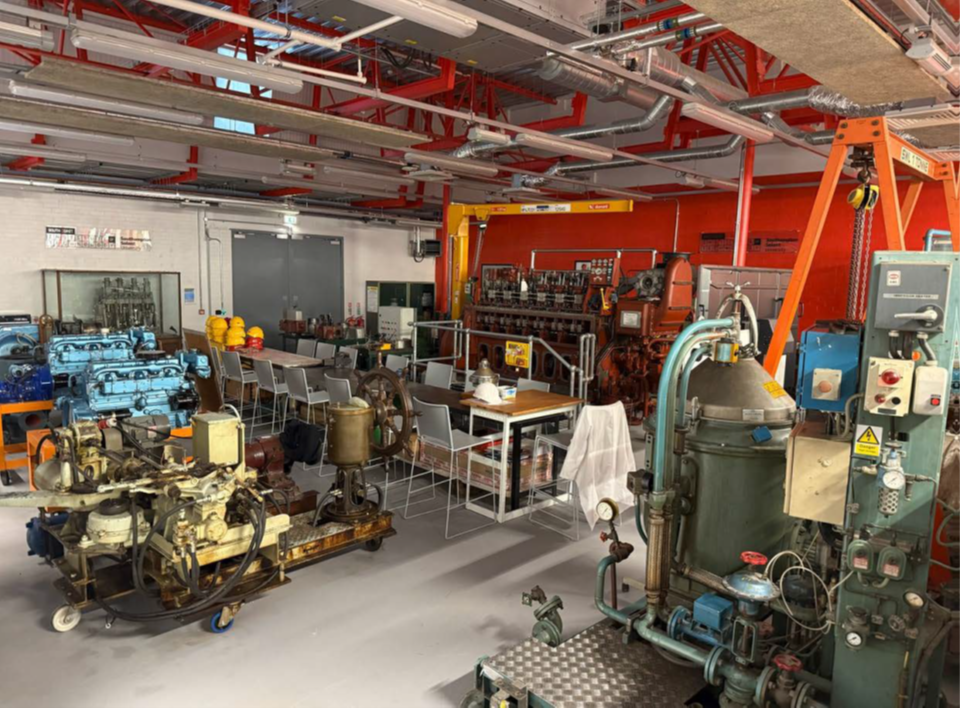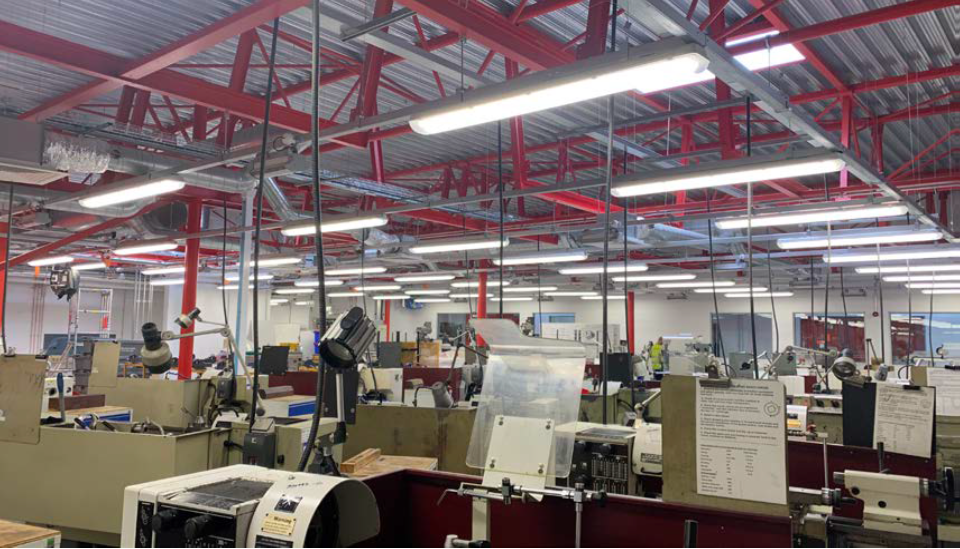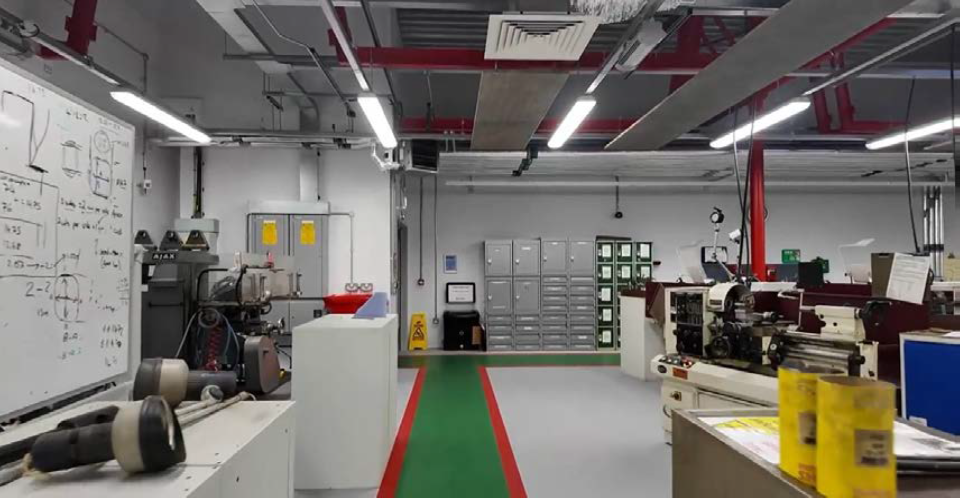
We delivered the £7 million transformation of the Sir Christopher Cockerell Building at Southampton Solent University, creating a state-of-the-art facility for engineering, marine and yacht design education. Spanning over 2,000m², the refurbished building now provides high-spec laboratories, fabrication and welding workshops, and advanced teaching spaces—while maintaining a fully operational marine tow tank throughout the works.
Delivered via a two-stage procurement route, the project evolved from concept to construction through early collaboration with the client and design team. This approach proved critical as initial investigations uncovered major structural and technical challenges that required a fundamental rethink of the scheme.
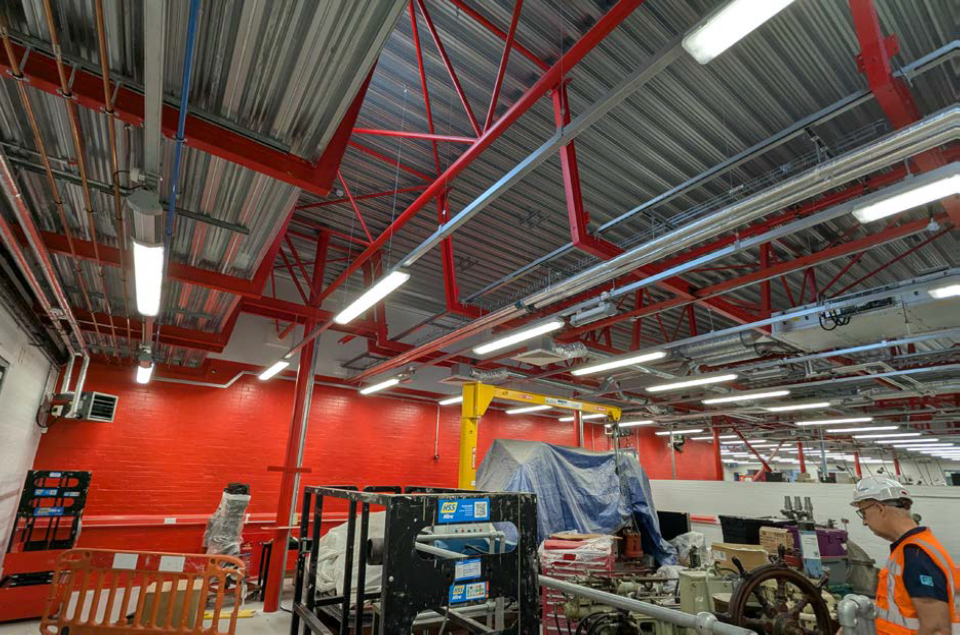
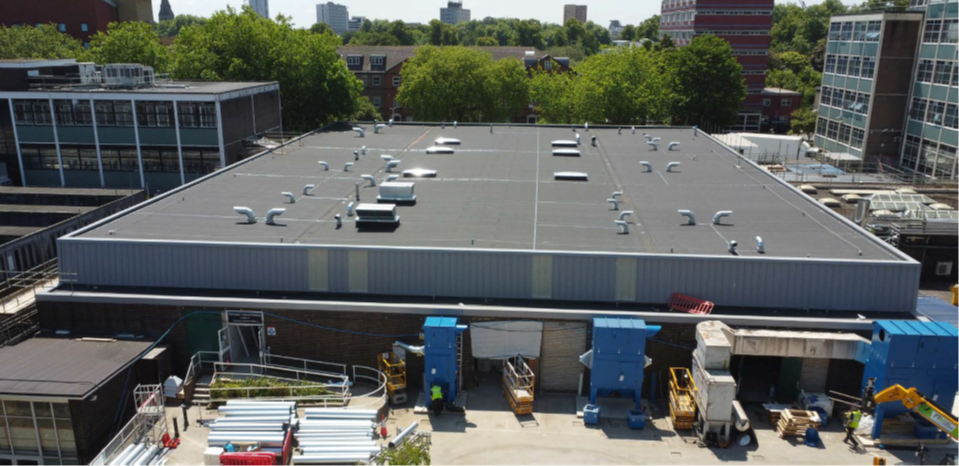
One of the most significant discoveries was the condition of the existing roof. Originally intended for upgrade, it was instead found to be fragile and unsuitable for refurbishment, with asbestos present in rooflight components. Working closely with consultants and the university, the team developed a revised solution to replace the entire roof with a modern flat system. This not only improved thermal performance and long-term maintenance but also maximised the available space and enabled future installation of photovoltaic panels.
The building’s live environment added further complexity. Critical services, including heating, power, and data, passed through the site and had to remain operational at all times, while the programme needed to align with the university calendar to minimise disruption. Careful sequencing, detailed planning, and close stakeholder coordination ensured that works progressed efficiently without impacting day-to-day campus operations.
Internally, the project required a highly technical mechanical and electrical installation to support specialist teaching spaces. Welding workshops in particular presented a challenge due to high ventilation demands and limited existing power capacity. In response, a bespoke solution was developed incorporating tempered air systems and localised infrared heating, ensuring effective performance while maintaining energy efficiency.
As the scope expanded, particularly following the roof redesign, programme management and sequencing became critical. A phased construction strategy allowed sections of the roof to be safely removed and replaced while internal works progressed beneath, maintaining momentum across the programme.
Sustainability and social value were embedded throughout delivery. The project exceeded its initial SKA Bronze target, achieving performance aligned with Silver standards. A strong focus on local engagement saw 66% of subcontract spend (£3.2m) delivered within the Hampshire region, alongside 80% locally sourced materials and the creation of apprenticeship and training opportunities. Students also benefited directly through site visits, connecting academic learning with real-world construction.
The completed SMART Centre is a future-focused learning environment that supports the next generation of engineers and maritime professionals. Delivered through collaboration, innovation and adaptability, the project stands as a high-quality, sustainable facility that bridges education and industry, fittingly honouring the legacy of Sir Christopher Cockerell.
The project was successfully completed on time for the start of the 2025-26 academic year and was officially opened by Her Royal Highness The Princess Royal in January 2026.